Introduction: The Quality Crisis in Institutional Recycling
If you manage recycling programs at a university, corporate campus, sports venue, or entertainment facility, you already know the challenge: contamination. Despite good intentions, 25-35% of material placed in single-stream recycling bins is contaminated with food waste, trash, or incompatible materials. This contamination destroys value, increases processing costs, and undermines sustainability goals.
The problem is not lack of effort. The problem is that most recycling systems were designed for convenience, not quality. When a bottle or can enters a contaminated bin, it loses value instantly, regardless of how sophisticated your downstream processing might be. For campuses and corporate venues with ambitious waste diversion and ESG reporting requirements, this represents both a financial drain and a credibility gap.
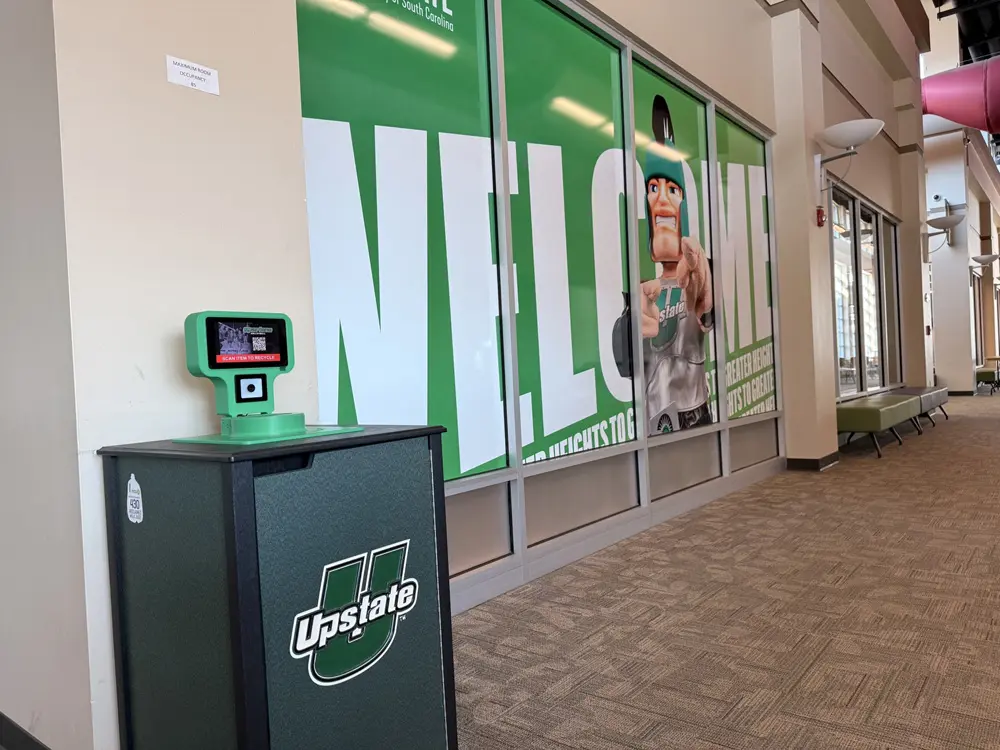
The good news? Controlled institutional environments like universities, corporate facilities, and entertainment venues offer a unique opportunity to solve contamination at its source: the bin itself. When organizations take control of the point of disposal using smart bin technology and data-driven monitoring, leading institutions have achieved contamination rates below 10%, collection cost reductions of 20-30% through optimized scheduling, and significantly higher commodity prices for clean material streams.
This is not a future vision. This is what leading campuses and venues are achieving today.
Research Context: Why Institutional Recycling Differs from Residential Programs
Recent national studies paint a challenging picture for recycling in the United States:
- Only 21% of residential recyclables are actually captured (The Recycling Partnership, 2024)
- Single-stream contamination rates average 25-35% and have increased in recent years (NYC 2023, Oregon DEQ 2023)
- Even after MRF processing, many outbound streams exceed quality standards, with contamination rates above 14% (Oregon DEQ 2023)
- National recycling rates have stagnated around 35% for over a decade
These statistics reflect primarily residential curbside programs, where collection is uncontrolled and user behavior is difficult to influence.
Institutional environments offer distinct advantages:
- Controlled settings where organizations manage bins, signage, and collection
- Consistent user populations (students, employees, visitors) who can be educated and influenced
- Organizational authority to implement technology and enforce standards
- Higher-value material streams focused on containers (aluminum, PET) rather than mixed waste
- Data verification capabilities that address the gaps identified by EPA researchers, who found that only 50% of states collect robust recycling data
Smart bin technology leverages these advantages to achieve contamination reduction and material quality that would be difficult or impossible in residential settings. The key is preventing contamination at the source rather than attempting to remediate it downstream at MRFs.
The Hidden Cost of Recycling Contamination on Campuses and Corporate Venues
Most people assume that when they drop a bottle or can in a recycling bin, it will become something new. In reality, what happens at that bin often decides whether that material becomes a high-value commodity and reliable feedstock for new products, or an expensive problem that gets downcycled or discarded.
The Value at Stake
Today, aluminum cans are already one of the most valuable and efficiently recycled packaging materials. Clean aluminum scrap behaves like a strong commodity with consistent demand. PET bottles can also be valuable, especially when turned into bottle-grade rPET or textile fibers. However, in many systems PET is mixed with other plastics, contaminated with food and trash, and often downcycled or lost instead of returning to packaging.
Where Value Gets Destroyed
For campuses, corporate facilities, and venues, contamination creates multiple hidden costs:
- Lower commodity revenue: Contaminated streams sell for substantially less than clean, sorted material, with price differences varying by material type and market conditions
- Higher processing fees: Materials recovery facilities (MRFs) charge more for contaminated loads or reject them entirely
- Wasted labor: Staff spend time sorting through bins, addressing overflow, and managing complaints
- Failed sustainability targets: Contamination reduces actual diversion rates, making ESG reporting goals harder to achieve
- Reputation risk: Visible contamination and overflowing bins undermine institutional commitment to sustainability
In controlled environments like universities and corporate campuses, where organizations have direct control over bins, signage, and user behavior, these losses are preventable.
Why Traditional MRF-Dependent Systems Fail Institutional Recyclers
A large part of the recycling system is built around materials recovery facilities (MRFs) that sort and rescue value from mixed, often dirty streams. This approach is costly, imperfect, and leaves a lot of potential unrealized.
The Limitations of MRF-Centric Systems
Many of the right ideas already exist in the broader recycling ecosystem:
- Deposit return systems produce clean container streams that perform very well as both commodities and feedstock
- Curbside programs increase participation but often struggle with contamination rates of 25-35%
- Modern MRF technology improves sorting but cannot fully reverse the damage caused at the bin
- Design for recyclability and policy tools such as recycled content mandates are important, but they do not directly control what users put in a bin or how clean those materials are
What Is Missing: Control at the Point of Disposal
MRFs act as cleanup crews, attempting to recover value after contamination has already occurred. For campuses and corporate venues, this creates a fundamental mismatch. These institutions have the ability to control collection environments, yet most rely on systems designed for uncontrolled residential waste.
Contamination at the bin, single-stream collection designed for convenience rather than quality, and dependence on MRFs to salvage contaminated loads all reduce the value of PET and aluminum. The result is that even well-intentioned campus recycling programs struggle to produce the clean, certified feedstock that manufacturers want.
Recent research confirms this challenge. Oregon DEQ’s 2023 study of commingled recycling facilities found that none of the six full-line processors met the 5% maximum outbound contamination standard, with contamination rates exceeding 14% even after processing. This demonstrates that downstream sorting alone cannot solve the contamination problem.
Smart Recycling Solutions: Quality Control at the Point of Disposal
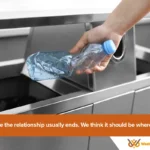
The bin is the first and most important quality control point in the recycling supply chain. In that moment, PET and aluminum either stay clean, correctly placed, and ready to become high-value commodities and feedstock, or they get mixed with food, trash, and incompatible plastics.
Protecting value at the bin means:
- Preventing obvious contaminants from entering the stream
- Guiding people toward the correct bin with instant feedback
- Designing systems so that the default outcome is a cleaner, better-sorted flow of containers
- Capturing data to verify quality and support ESG reporting
When that happens, downstream processing becomes more efficient and more cost-effective. Cleaner input means higher yields of usable rPET, lower energy and water use in washing, and less intensive decontamination. This directly improves the potential for PET to return to food-grade packaging and high-quality textile applications. For aluminum, it supports consistent, high-quality scrap that can be remelted repeatedly.
How Material Recognition Reduces Contamination
Smart bin technology uses material recognition to identify acceptable containers and reject contaminated or incompatible items before they enter the recycling stream. This approach delivers:
- Real-time item validation: Each item is assessed as it approaches the bin
- Instant user feedback: Visual and audio cues teach users correct disposal habits
- Automated sorting: Accepted items are directed to appropriate streams without manual intervention
- Contamination prevention: Food waste, trash, and incompatible materials are rejected at the source
For campuses and venues with high-traffic areas, this transforms bins from passive containers into active quality control systems. Unlike passive signage or education campaigns alone, which research shows have limited effectiveness, smart bin technology provides active intervention at the point of disposal. Best-performing institutional sites using this technology have achieved contamination rates below 10%, approaching the quality levels seen in deposit return systems.
Real-Time Data for ESG Reporting and Waste Diversion Goals
Every accepted item becomes a data point. Smart recycling systems track:
- Total items recycled by location, material type, and time period
- Contamination attempts and rejection rates by bin and location
- Diversion rates calculated from actual material flows, not estimates
- Behavioral patterns that identify high-contamination hotspots
This data transforms ESG reporting from rough estimates to verified metrics. Campuses and corporate venues can document actual contamination reduction, prove material quality to downstream partners, and demonstrate measurable progress toward sustainability goals.
One significant advantage of smart bin technology is the generation of verified, item-level data that addresses the data gaps identified by EPA and other researchers. This enables institutions to document actual performance rather than relying on estimates, providing the kind of material-specific tracking that most jurisdictions currently lack.
Measurable Impact: What Institutional Recyclers Achieve
When campuses, corporate facilities, and entertainment venues implement smart recycling solutions with contamination control at the bin, they achieve measurable results across multiple dimensions:
Contamination Reduction
- Substantial reduction in contamination rates compared to traditional open bins, with best-performing sites achieving contamination below 10%
- Clean stream certification that qualifies material for higher-value markets
- Consistent quality that meets feedstock specifications for bottle-to-bottle recycling
Cost Savings
- 20-30% reduction in collection costs through optimized pickup scheduling based on real-time bin monitoring
- Lower processing fees due to cleaner input streams
- Higher commodity revenue from clean, sorted PET and aluminum, with premiums varying by material type and market conditions
Operational Efficiency
- Reduced staff time spent on contamination management and bin maintenance
- Fewer overflow incidents that create mess and attract additional trash
- Predictive maintenance based on real-time bin fullness monitoring
Sustainability Verification
- Verified diversion rates for ESG reporting and sustainability disclosures
- Auditable data that tracks material from bin to end market
- Chain of custody documentation that certifies material quality for corporate buyers
Material-Specific Performance
Results vary significantly by material type. Research shows that capture rates and contamination control differ dramatically across recyclables. Smart bin technology works best for rigid containers like aluminum cans, PET bottles, and HDPE bottles. These materials have consistent shapes, high commodity value, and strong market demand. Mixed plastics, thermoforms, and flexible packaging remain challenging even with advanced technology. For institutional recyclers, focusing on high-value container streams (aluminum and PET bottles) delivers the best return on investment and the cleanest material for remanufacturing.
Long-Term System Evolution
There is also a longer-term opportunity. In controlled environments such as universities, sports and entertainment venues, corporate campuses, and public collection points in smart city projects, it is realistic to collect enough protected, low-contamination PET and aluminum that container streams may require only light pre-sorting before moving directly to specialized processors.
MRFs will remain essential for mixed residential curbside material, but for these managed container streams the system can evolve toward shorter, cleaner paths that capture more value with less cost.
Comparison: Traditional Approach vs. Smart Recycling Solutions
| Dimension | Traditional MRF-Dependent Approach | Waste Wise Innovation Approach |
|---|---|---|
| Contamination Control | After collection, at MRF | At the bin, before collection |
| Contamination Rate | 25-35% in single-stream systems | Below 10% in best-performing institutional sites |
| User Feedback | None (passive bins) | Instant feedback at point of disposal |
| Data Availability | Limited, estimated post-collection | Real-time, item-level tracking |
| ESG Reporting | Based on estimates and MRF reports | Verified metrics from actual streams |
| Material Quality | Variable, depends on MRF sorting | Consistent, pre-sorted at source |
| Commodity Value | Standard rates for mixed streams | Premium pricing for clean streams (varies by material and market) |
| Collection Efficiency | Fixed schedules, frequent overflow | Optimized by bin fullness data |
| Chain of Custody | Limited traceability | Full documentation from bin to processor |
| Best Application | Residential curbside collection | Campus, corporate, venue environments |
Waste Wise Innovation: Smart Recycling Technology for Controlled Environments
Waste Wise Innovation focuses on institutional and commercial environments, not residential curbside. In these settings, organizations control the bins, the messaging, and the contracts, which makes it possible to design for cleaner, higher-value streams.
Our integrated platform combines smart bin technology, real-time analytics, operational monitoring, and supply chain traceability to help campuses, corporate facilities, and venues achieve measurable contamination reduction and verified sustainability outcomes.
Topper Stopper™: Material Recognition at the Bin
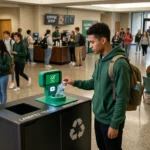
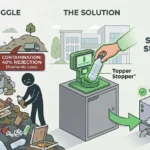
Topper Stopper™ helps protect value at the bin by recognizing items and only allowing accepted containers into the recycling stream. It provides instant feedback when items are rejected and gradually builds better disposal habits.
Key benefits for campuses and venues:
- Prevents contamination before it enters the stream
- Substantially reduces contamination compared to open bins
- Guides users with visual and audio feedback
- Creates cleaner PET and aluminum streams that are more attractive as commodities and better suited as feedstock
TS Analytics™: Data-Driven Sustainability Reporting
TS Analytics™ turns every deposit into data. It tracks what is recycled, where, and how much, identifies contamination hotspots, and provides accurate numbers for ESG reporting and internal goals.
Key benefits for institutional recyclers:
- Real-time dashboards showing recycling volume, contamination rates, and diversion progress
- Location-specific data that identifies high-contamination areas for targeted intervention
- Verified metrics that replace estimates in sustainability reports
- Historical trends that demonstrate program improvement over time
- Proof that specific streams are consistently clean and suitable for higher-value markets
Recycle Smart Monitoring System™: Optimized Collection Operations
Recycle Smart Monitoring System™ keeps operations efficient. It monitors bin fullness, helps prevent overflow that invites trash, and reduces unnecessary pickups. That makes it easier and cheaper to maintain high-quality container streams.
Key benefits for campus and venue operations:
- 20-30% reduction in collection costs through optimized scheduling based on actual bin fullness
- Fewer overflow incidents that create contamination and visual blight
- Predictive alerts that prevent bins from becoming overfilled
- Route optimization that reduces vehicle miles and emissions
EcoLedger™ and Chain of Custody: Certified Feedstock Traceability
EcoLedger™, Chain of Custody, and Sustainable Supply Chain tools add traceability. They document where material came from and how it was handled, so partners can treat these PET and aluminum streams as certified secondary feedstock rather than generic recyclables.
Key benefits for supply chain integration:
- Full documentation from collection point to processor
- Quality certification that supports premium pricing
- Verified data for Scope 3 emissions reporting
- Traceability that meets corporate sustainable sourcing requirements
Building a Cleaner Supply Chain: From Campus Bins to Certified Feedstock
A better recycling system starts at the bin. When materials are protected, validated, and measured at that point, PET and aluminum can move through the system as higher-value commodities and trusted feedstock for new bottles, cups, and textiles.
For campuses, corporate facilities, sports venues, and entertainment complexes, this represents a fundamental shift: from being passive waste generators hoping that recycling “works somewhere downstream” to becoming active participants in a verified, high-quality supply chain for secondary materials.
This shift requires:
- Smart technology that controls quality at the bin
- Real-time data that verifies performance and supports ESG reporting
- Operational systems that optimize collection efficiency
- Supply chain integration that documents material quality and chain of custody
Smart bin technology addresses contamination at the point of disposal, but broader system challenges remain. Downstream processing capacity, market demand for recycled materials, and collection infrastructure all affect ultimate recycling outcomes. By focusing on the elements that institutional recyclers can control (the bin, the data, the collection operations, and the supply chain relationships), organizations can achieve dramatic improvements even while working within existing system constraints.
Waste Wise Innovation helps campuses, venues, workplaces, and public spaces act on this today and build a more sustainable supply chain for tomorrow. By focusing on controlled institutional environments where contamination can be prevented rather than remediated, we help organizations achieve the clean, consistent material streams that manufacturers need and the verified sustainability outcomes that stakeholders demand.
Frequently Asked Questions
How can universities reduce recycling contamination?
Universities can reduce recycling contamination by implementing smart bin technology that recognizes acceptable containers and rejects contaminants at the point of disposal. This approach, combined with real-time data monitoring to identify contamination hotspots, enables leading institutions to achieve contamination rates below 10%. Key strategies include: using material recognition systems at high-traffic locations, providing instant user feedback to build better habits, monitoring bin fullness to prevent overflow, and tracking contamination patterns to target education efforts. Unlike passive signage alone, which research shows has limited effectiveness, smart bin technology provides active intervention that prevents contamination before it enters the stream.
What is smart bin technology?
Smart bin technology uses sensors and material recognition systems to identify recyclable items and reject contaminants before they enter the recycling stream. Unlike traditional passive bins, smart bins provide real-time feedback to users, capture data on every disposal attempt, monitor bin fullness, and actively prevent contamination. For campuses and corporate venues, this technology transforms recycling bins from passive containers into active quality control points that protect material value and generate verified data for ESG reporting. The technology works best for rigid containers like aluminum cans and PET bottles, which have consistent shapes and high commodity value.
How do you measure recycling program success?
Recycling program success should be measured using verified metrics, not estimates. Key performance indicators include: actual contamination rate (measured by rejected items vs. accepted items), total material diverted by type and location, diversion rate as a percentage of total waste, cost per ton of clean material collected, commodity revenue from clean streams, and contamination reduction over time. Smart recycling systems provide real-time tracking of these metrics, replacing rough estimates with auditable data suitable for ESG reporting and sustainability disclosures. This addresses the data gaps identified by EPA researchers, who found that only about 50% of U.S. states collect robust data on recycling programs.
What’s the ROI of smart recycling systems?
Smart recycling systems typically deliver ROI through four channels: (1) 20-30% reduction in collection costs through optimized pickup scheduling based on actual bin fullness, (2) higher commodity revenue from clean, sorted material streams, with premiums varying by material type and market conditions, (3) reduced labor costs from less contamination management and overflow cleanup, and (4) improved ESG reporting with verified metrics that support sustainability commitments. Many campuses and corporate venues achieve payback within 18-36 months, with ongoing operational savings and higher material value after that period. Results vary based on facility size, material volumes, and local market conditions.
How does this work in high-traffic venues?
High-traffic venues like sports stadiums, entertainment complexes, and campus common areas are ideal environments for smart bin technology. The system is designed for rapid throughput, processing items in under 3 seconds per deposit. Material recognition works even in crowded conditions, providing instant visual and audio feedback that guides users without creating bottlenecks. Real-time monitoring alerts staff when bins approach capacity, preventing overflow during peak events. The result is dramatically lower contamination even in challenging high-volume settings where traditional bins fail. Best-performing venues have achieved contamination rates below 10%, approaching the quality of deposit return systems.
Does this work equally well for all types of recyclables?
Smart bin technology works best for rigid containers like aluminum cans, PET bottles, and HDPE bottles. These materials have consistent shapes, high commodity value, and strong market demand. Research shows capture rates and contamination control vary significantly by material type. Mixed plastics, thermoforms, and flexible packaging remain challenging even with advanced technology. For institutional recyclers, focusing on high-value container streams (aluminum and PET bottles) delivers the best return on investment and the cleanest material for remanufacturing. This material-specific approach aligns with research showing that different recyclables perform very differently in collection and processing systems.
Ready to reduce contamination and achieve verified sustainability outcomes? Waste Wise Innovation provides smart recycling solutions designed specifically for campuses, corporate facilities, and venue environments. Contact us to learn how your organization can achieve cleaner streams, lower costs, and certified feedstock quality.