For years, the recycling industry has been told the same story: the path to cleaner streams, better diversion rates, and stronger sustainability reporting runs through more technology. Smarter bins. More sensors. AI at every touchpoint. Waste Wise Innovation spent real time inside that paradigm, and what we learned in the field is reshaping how we work.
The new direction is simple to say and harder to execute: Less tech where it isn’t needed. More data where it matters.
The recycling problem isn’t a hardware problem
Most facilities we walk into don’t lack effort. They don’t lack equipment. What they lack is a clear, trustworthy picture of what’s actually happening in their recycling stream.
Without that visibility, every downstream decision is built on guesswork: staffing, hauler contracts, ESG reporting, capital planning, contamination response. You can bolt sensors onto every bin in a building and still not answer the basic questions. What’s really being thrown away? When? By whom? How clean is it when it leaves the floor?
That’s not a technology gap. It’s an information gap. And solving an information problem by defaulting to more hardware is how the industry ended up with fragile, expensive deployments that underdeliver.
A three-layer method, not a product catalog
WWI’s approach now centers on a disciplined method built around how recycling actually fails and where intervention actually works.
1. Understand the stream.
Give facilities real visibility into what’s happening at the bin: when disposal occurs, where contamination concentrates, how often streams are being misused, and how cleanly material is leaving each collection point. Before anything else, the picture has to be honest.
2. Shape the moment of disposal.
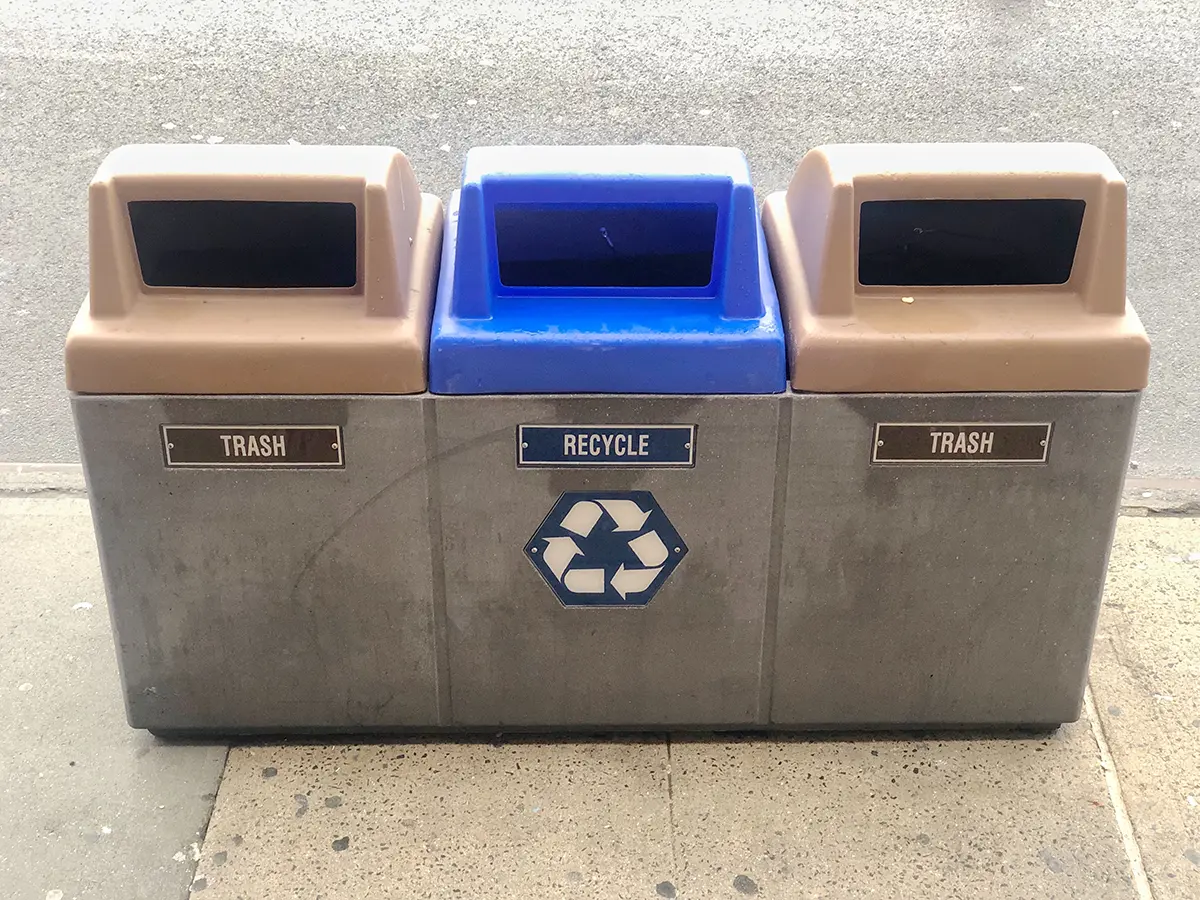
The person standing at the bin makes the decision that determines everything downstream. Behavioral design, including clear cues, informed choices, and thoughtful nudges, outperforms enforcement and outperforms autopilot signage. We’re replacing habit with informed action at the exact moment it matters.
3. Verify the outcome.
Build an audit-ready data trail of what was collected, weighed, and graded. Facilities need to defend their reporting, resolve hauler disputes, and prove what’s actually working. Verification isn’t a nice-to-have. It’s the foundation of accountability.
Technology, applied with discipline
This isn’t a rejection of technology. It’s a refusal to let technology define the strategy.
Material Authentication Units, verified weighing, and the EcoLedger™ data backbone all remain part of the WWI toolkit. But they sit inside the method rather than driving it. Technology earns its place where it authenticates, verifies, and proves, not where it merely adds cost, complexity, or fragile infrastructure at every bin.
The test is straightforward: does this device produce trustworthy data that a facility can act on, report against, and defend? If yes, it belongs. If not, it doesn’t, no matter how impressive the demo.
What this means for the facilities we serve
For our partners, the shift translates into something tangible:
- Clearer answers about what’s actually in your stream, instead of vendor dashboards full of noise.
- Behavior-first interventions at the bin that don’t require capital projects to deploy.
- Defensible reporting backed by verified weights and grades, not estimates.
- Lower-risk technology investments, focused on the points in the workflow where verification creates the most leverage.
The realization behind the shift
This evolution wasn’t theoretical. It was earned through years of installations, pilots, audits, and honest conversations with facility operators about what was and wasn’t working.
The most effective recycling solutions don’t start with picking a device. They start with understanding the problem clearly, shaping behavior thoughtfully, and applying technology where it adds the most value.
Less tech where it isn’t needed. More data where it matters. Real accountability for the facilities that depend on it for daily operational decisions.
That’s the work going forward.
Dr. Leotis Bloodworth is the Co-Founder and Chief Executive Officer of Waste Wise Innovation, where he leads the development of advanced technology solutions designed to eliminate recycling stream contamination. A specialist in waste sorting and product development, he is the driving force behind the company’s recycling intelligence network platform. With over a decade of experience in large-scale recycling activations, Dr. Bloodworth has managed post-event waste logistics for major sports stadiums and pioneered initiatives that transform discarded materials into sustainable apparel. Based in Charlotte, North Carolina, he focuses on scaling hardware and software innovations that bridge the gap between physical infrastructure and digital data, empowering organizations to achieve transparent, measurable, and highly efficient circular economy models.