When Waste Wise Innovation first partnered with the University of South Carolina Upstate, both organizations shared a vision of a cleaner, connected, and circular campus recycling system. As the pilot progresses, that vision is being explored through on-campus deployments and ongoing measurement.
Building on the joint pilot program, Waste Wise Innovation has installed Material Authentication Units at multiple locations across the USC Upstate campus. This phase focuses on collecting data and observing how placement, engagement, and system design relate to recycling accuracy and participation.
From Observed Contamination to Structured Measurement
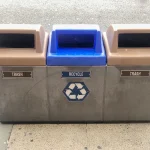
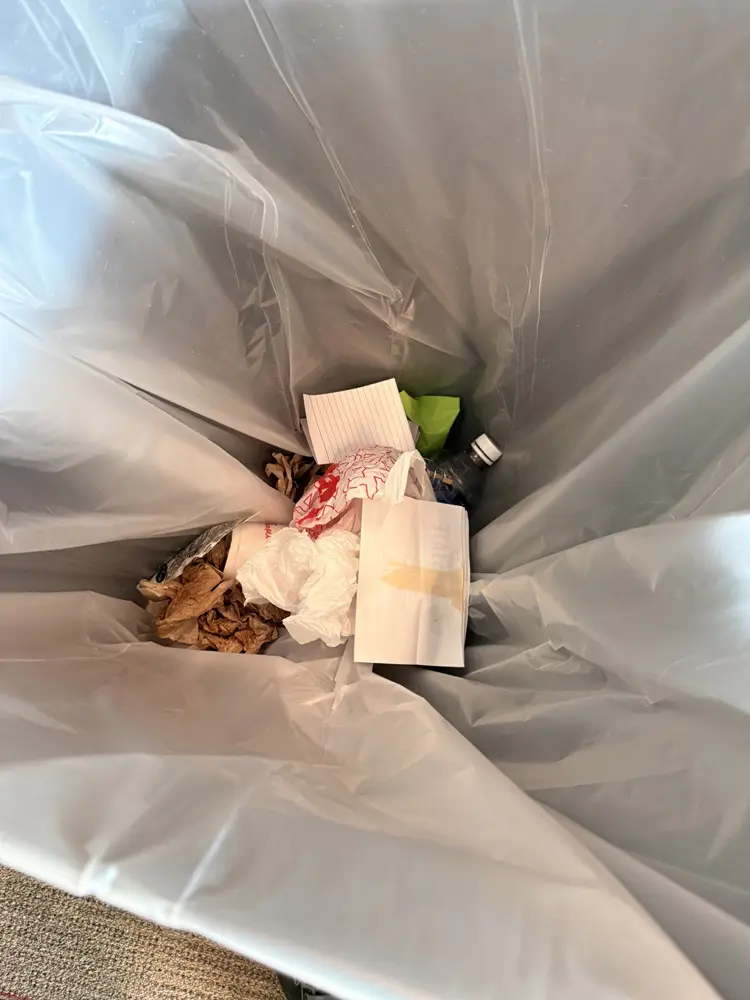
During the initial site evaluation, the Waste Wise Innovation team observed contamination in several traditional recycling bins, where non-recyclable items were mixed with recyclables. In these instances, recyclable materials are frequently redirected to landfills due to improper sorting.
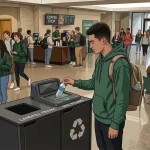
To address this, USC Upstate introduced Material Authentication Unit technology, a system designed to guide users at the point of disposal using behavioral design principles. In the first week, the team recorded early indications of increased recycling activity, which continue to be tracked over time.
Recent physical audits conducted at locations with Material Authentication Units reported the following at the time of review:
- No contamination was found in the audited recycling bins equipped with the units.
- The audited bins contained items verified as recyclable.
- Material in the bins precisely matched data from the anonymous barcode scans logged through the units.
- Paired landfill bins at these locations did not contain recyclables during the audit interval.
As the pilot program continues, these initial observations are being documented to understand the specific conditions under which contamination may be reduced and sorting accuracy may improve.
Connected Data for a Smarter Campus
The Material Authentication Units generate item-level data intended to support operational visibility. Each scanned container contributes to an anonymous deposit log that facilities and sustainability teams can analyze to understand what is being deposited, where, and how frequently. Early incoming data indicates variance in unit usage by location, which can inform decisions about bin placement and operational priorities.
This visibility helps USC Upstate track progress over time, identify opportunities for adjustments in bin placement, and engage the campus community with accurate information about observed disposal patterns.
A Reference Point for Other Universities
USC Upstate’s rollout offers a live example of how a campus might approach recycling with behavioral design elements, connected technology, and verifiable data collection. As this pilot develops, the observations may inform:
- Approaches to improving sorting accuracy at the source
- Methods for addressing contamination at the exact point of disposal
- Tactics for student and faculty engagement via connected applications
- The development of measurable, report-ready metrics for sustainability initiatives
Continuing the Work
With data collection underway, Waste Wise Innovation and USC Upstate are documenting findings to better understand how engagement, data-driven technology, and behavioral design support campus recycling efforts over time.
Interested in learning more about Material Authentication Units and current pilot observations?
Jailyn Bloodworth is the Chief Operations Officer at Waste Wise Innovation, where she integrates business leadership with a deep commitment to environmental stewardship. Holding an M.A. in Communication and Business Leadership from High Point University, Jailyn oversees the operational strategies that bring the company’s sustainability technologies to life. Her background as a community health worker and executive leader provides a unique perspective on holistic, human-centered solutions, ensuring that organizational growth aligns with social and environmental responsibility. Based in Charlotte, North Carolina, she focuses on scaling eco-conscious initiatives that harmonize business objectives with the global transition toward a circular economy.