Part 3: Plastic Production & Recycling
Introduction
With the mounting pressure to reduce plastic waste, technology has become a powerful ally. Forward-thinking companies are leveraging connected solutions to transform the way they collect, track, and recycle materials. At the forefront of this shift is Waste Wise Innovation.
What Is Connected Recycling?
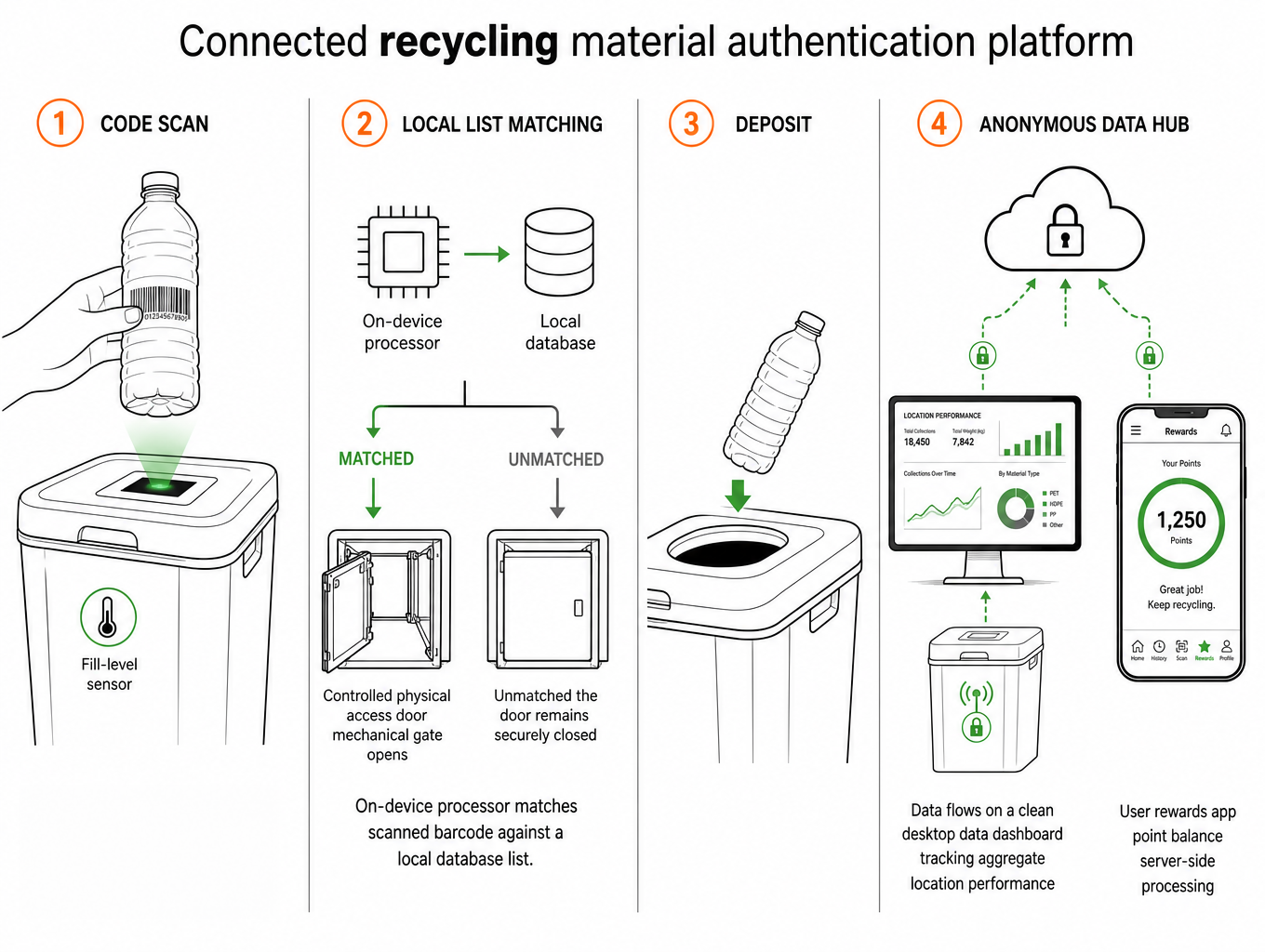
Connected recycling involves using sensors, data analytics, and automated ledgering systems to enhance recycling processes. From material verification units that scan barcodes against configured lists to smart sensors that track fill levels, these innovations streamline operations and increase efficiency.
Benefits of a Data-Driven Approach
Technology enables precise analytics of logged recycling performance, reduces contamination rates, and helps municipalities and corporations make informed decisions. Through passive, batch-aggregated material ledgering, businesses can identify patterns, optimize pick-up schedules, and accurately measure impact with the help of connected tools.
Waste Wise Innovation’s Role
Waste Wise Innovation is leading the charge by integrating connected data solutions into existing recycling infrastructure. Their systems, such as the Material Authentication Unit and Infrastructure Analytics, not only improve performance but also make it easier for companies to meet sustainability goals while controlling costs.
Conclusion
Connected recycling is not just the future, it is the now. With partners like Waste Wise Innovation, businesses can implement sustainable solutions that are efficient, scalable, and impactful. Embracing these technologies means staying ahead of both economic and environmental challenges.
Jailyn Bloodworth is the Chief Operations Officer at Waste Wise Innovation, where she integrates business leadership with a deep commitment to environmental stewardship. Holding an M.A. in Communication and Business Leadership from High Point University, Jailyn oversees the operational strategies that bring the company’s sustainability technologies to life. Her background as a community health worker and executive leader provides a unique perspective on holistic, human-centered solutions, ensuring that organizational growth aligns with social and environmental responsibility. Based in Charlotte, North Carolina, she focuses on scaling eco-conscious initiatives that harmonize business objectives with the global transition toward a circular economy.